最近一次同步时间:2021 年 1 月 4 日 01 点 30 分
如文档内容有误,点击该链接【已失效】对文档进行修改,定时会同步到网站上
文档采用 Markdown 格式排版,可以参考该网站进行简单学习,感谢参与整理的同学们
第 1 章 Inside the Living Cell: Structure and Function of Internal Cell Parts
-
Cytoplasm: The Dynamic, Mobile Factory (细胞质:动力工厂)
Most of the properties we associate with life are properties of the cytoplasm. Much of the mass of a cell consists of this semifluid substance, which is bounded on the outside by the plasma membrane. Organelles are suspended within it, supported by the filamentous network of the cytoskeleton. Dissolved in the cytoplasmic fluid are nutrients, ions, soluble proteins, and other materials needed for cell functioning.
生命的大部分特征表现在细胞质的特征上。细胞质大部分由半流体物质组成,并由细胞膜(原生质膜)包被。细胞器悬浮在其中,并由丝状的细胞骨架支撑。细胞质中溶解了大量的营养物质,离子,可溶蛋白以及维持细胞生理需求的其它物质。
-
The Nucleus: Information Central(细胞核:信息中心)
The eukaryotic cell nucleus is the largest organelle and houses the genetic material (DNA) on chromosomes. (In prokaryotes the hereditary material is found in the nucleoid.) The nucleus also contains one or two organelles-the nucleoli-that play a role in cell division. A pore-perforated sac called the nuclear envelope separates the nucleus and its contents from the cytoplasm. Small molecules can pass through the nuclear envelope, but larger molecules such as mRNA and ribosomes must enter and exit via the pores.
真核细胞的细胞核是最大的细胞器,细胞核对染色体组有保护作用(原核细胞的遗传物质存在于拟核中)。细胞核含有一或二个核仁,核仁促进细胞分裂。核膜贯穿许多小孔,小分子可以自由通过核膜,而象mRNA和核糖体等大分子必须通过核孔运输。
-
Organelles: Specialized Work Units(细胞器:特殊的功能单位)
All eukaryotic cells contain most of the various kinds of organelles, and each organelle performs a specialized function in the cell. Organelles described in this section include ribosomes, the endoplasmic reticulum, the Golgi complex, vacuoles, lysosomes, mitochondria, and the plastids of plant cells.
所有的真核细胞都含有多种细胞器,每个细胞器都有其特定功能。本节主要介绍核糖体,内质网,高尔基体系,液泡,溶酶体,线粒体和植物细胞中的质体。
The number of ribosomes within a cell may range from a few hundred to many thousands. This quantity reflects the fact that, ribosomes are the sites at which amino acids are assembled into proteins for export or for use in cell processes. A complete ribosome is composed of one larger and one smaller subunit. During protein synthesis the two subunits move along a strand of mRNA, “reading” the genetic sequence coded in it and translating that sequence into protein. Several ribosomes may become attached to a single mRNA strand; such a combination is called a polysome. Most cellular proteins are manufactured on ribosomes in the cytoplasm. Exportable proteins and membrane proteins are usually made in association with the endoplasmic reticulum.
核糖体的数量变化从几百到几千,核糖体是氨基酸组装成蛋白质的重要场所。完整的核糖体由大亚基和小亚基组成。核糖体沿着mRNA移动并阅读遗传密码,翻译成蛋白质。一条mRNA上可能有多个核糖体,称多聚核糖体。大多数细胞蛋白是由细胞质中核糖体生产。输出蛋白和膜蛋白通常与内质网有关。
The endoplasmic reticulum, a lacy array of membranous sacs, tubules, and vesicles, may be either rough (RER) or smooth (SER). Both types play roles in the synthesis and transport of proteins. The RER, which is studded with polysomes, also seems to be the source of the nuclear envelope after a cell divides. SER lacks polysomes; it is active in the synthesis of fats and steroids and in the oxidation of toxic substances in the cell. Both types of endoplasmic reticulum serve as compartments within the cell where specific products can be isolated and subsequently shunted to particular areas in or outside the cell.
内质网,带有花边的生物囊,有管状,泡状之分,以及光滑和粗糙面区别。两种都与蛋白质的合成和运输有关。粗糙内质网上分布许多核糖体,也可能提供细胞分裂后所需的细胞膜。光滑内质网上无核糖体,主要作用是脂肪和类固醇的合成以及细胞内有毒物质的氧化。两种内质网合成的产物在其中进行分流或运输到细胞外。
Transport vesicles may carry exportable molecules from the endoplasmic reticulum to another membranous organelle, the Golgi complex. Within the Golgi complex molecules are modified and packaged for export out of the cell or for delivery else where in the cytoplasm.
运输小泡能够将可运输分子从内质网运输到高尔基复合体上。在高尔基复合体中修饰,包装后输出细胞或传递到细胞质中的其他场所。
Vacuoles in cells appear to be hollow sacs but are actually filled with fluid and soluble molecules. The most prominent vacuoles appear in plant cells and serve as water reservoirs and storage sites for sugars and other molecules. Vacuoles in animal cells carry out phagocytosis (the intake of particulate matter) and pinocytosis (vacuolar drinking).
细胞中的液泡好象是中空的,但实际上充满了液体和可溶分子。最典型的液泡存在于植物细胞中,储备水,糖以及其它分子。动物中的液泡起吞噬和胞饮作用。
A subset of vacuoles are the organelles known as lysosomes, which contain digestive enzymes (packaged in lysosomes in the Golgi complex) that can break down most biological macromolecules. They act to digest food particles and to degrade damaged cell parts.
溶酶体是液泡亚单位,含有消化酶,降解大部分生物大分子。消化食物微粒和降解损伤的细胞残片。
Mitochondria are the sites of energy-yielding chemical reactions in all cells. In addition, plant cells contain plastids that utilize light energy to manufacture carbohydrates in the process of photosynthesis. It is on the large surface area provided by the inner cristae of mitochondria that ATP-generating enzymes are located. Mitochondria are self-replicating, and probably they are the evolutionary descendants of what were once free-living prokaryotes.
线粒体是细胞中化学产能的场所。另外,植物细胞中的质体在光合作用中利用光能产生碳水化合物,线粒体内嵴上提供了很大的表面积并分布着产ATP酶。线粒体自我复制,并且可能是自由生活的原核生物在进化中形成的后代。
There are two types of plastids: leucoplasts, which lack pigments and serve as storage sites for starch, proteins, and oils; and chromoplasts, which contain pigments. The most important chromoplasts are chloroplasts-organelles that contain the chlorophyll used in photosynthesis. The internal structure of chloroplasts includes stacks of membranes called grana, which are embedded in a matrix called the stroma.
质体有两种类型:白色体,缺乏色素,是淀粉,蛋白质和油的储备场所;色质体,含有色素。叶绿体是最重要的色质体,含有与光合作用有关的叶绿素。叶绿体的内部结构是由多层膜形成的叶绿体基粒,其中包埋在基质中的基粒称子座。
-
The Cytoskeleton(细胞骨架)
All eukaryotic cells have a cytoskeleton, which is a convoluted latticework of filaments and tubules that appears to fill all available space in the cell and provides support for various other organelles. A large portion of the cytoskeleton consists of threadlike microfilaments composed mainly of the contractile protein actin. They are involved in many types of intracellular movements in plant and animal cells. A second protein, myosin, is involve in the contraction of muscle cells. Another main structural component of the cytoskeleton consists of microtubules, which are composed of the globular protein tubulin and together act as scaffolding that provides a stable cell shape. Cytoskeletal intermediate filaments appear to impart tensile strength to the cell cytoplasm. Mechanoenzymes such as myosin, dynein, and kinesin interact with the cytoskeletal filaments and tubules to generate forces that cause movements.
所有的细胞都有细胞骨架,网络结构的纤丝充满了它所能触及的全部空间并且对细胞器提供支持作用。细胞骨架大部分由微丝组成,微丝主要由可收缩的肌动蛋白组成。动植物细胞的许多种类型细胞内运动与肌动蛋白有关。第二类蛋白是肌球蛋白,它与肌肉细胞的收缩有关。细胞骨架的另一个主要结构成分是微管,由球状的微管蛋白组成,象脚手架一般维持细胞的稳定形态。细胞骨架的中间丝提供了细胞质伸缩动力。机械酶,例如,肌球蛋白,动力蛋白,驱动蛋白与微丝,微管相互作用产生动力而引起细胞运动。
-
Cellular Movements(细胞运动)
Although the cytoskeleton provides some stability to cells, its microtubules and filaments and their associated proteins enable cells to move by creeping or gliding . Such movements require a solid substrate to which the cell can adhere and can be guided by the geometry of the surface. Some cells also exhibit chemotaxis, the ability to move toward or away from the source of a diffusing chemical.
尽管细胞骨架提供了细胞的某些稳定性,微丝,微管及相关蛋白能使细胞爬行或滑动。这种运动需要固体基质依托并通过表面几何形状的改变而运动。某些细胞具备趋药性,即趋向或逃离扩散开的化学源。
Certain eukaryotic cells can swim freely in liquid environments, propelled by whiplike cilia or flagella. Both cilia and flagella have the same internal structure: nine doublets (pairs of microtubules) are arranged in a ring and extend the length of the cilium or flagellum, and two more microtubules run down the center of the ring. Every cilium or flagellum grows only from the cell surface where a basal body is located. Movement is based on the activities of tiny dynein side arms that extend from one of the microtubules of each doublet.
某些真核细胞能在液体液体中自由运动,由纤毛或鞭毛推动。纤毛和鞭毛具有同样的内部结构:九个双微管环形排列,纵向延伸,环中心是两个或以上微管组成。纤毛或鞭毛从细胞表面的基体出生长,双微管的动力蛋白臂从一侧延伸到另一侧而引起运动。
Nutrients, proteins, and other materials within most plant cells are moved about via cytoplasmic streaming. The process occurs as myosin ˈmaiəusin肌凝蛋白 proteins attached to organelles 细胞器,小器官 push against microfilaments arrayed [əˈrei] 展示throughout the cell. Microfilaments and microtubules are responsible for almost all major cytoplasmic movements. During cell division, microtubules of the spindle assembled 集合, 收集 from tubutin subunits near organelles called centrioles move the chromosomes.
大部分植物细胞的营养,蛋白质和其它物质由细胞质流运输。这个过程是由于依附在细胞器上的肌球蛋白反推排列在细胞周围的微丝形成的。绝大部分细胞质运动由微丝和微管完成。在细胞分裂期间,中心粒周围的由微管蛋白亚基装配形成的纺锤体微管移向染色体。
第 2 章 Photosynthesis
Photosynthesis occurs only in the chlorophyllchlorophyll叶绿素-containing cells of green plants, algae藻, and certain protists原生生物and bacteria. Overall, it is a process that converts light energy into chemical energy that is stored in the molecular bonds. From the point of view of chemistry and energetics, it is the opposite of cellular respiration. Whereas 然而 cellular细胞的 respiration 呼吸is highly exergonic吸收能量的 and releases energy, photosynthesis光合作用 requires energy and is highly endergonic.
光合作用只发生在含有叶绿素的绿色植物细胞,海藻,某些原生动物和细菌之中。总体来说,这是一个将光能转化成化学能,并将能量贮存在分子键中,从化学和动能学角度来看,它是细胞呼吸作用的对立面。细胞呼吸作用是高度放能的,光合作用是需要能量并高吸能的过程。
Photosynthesis starts with CO2 and H2O as raw materials and proceeds through two sets of partial reactions. In the first set, called the light-dependent reactions, water molecules are split裂开 (oxidized), 02 is released, and ATP and NADPH are formed. These reactions must take place in the presence of 在面前 light energy. In the second set, called light-independent reactions, CO2 is reduced (via the addition of H atoms) to carbohydrate. These chemical events rely on the electron carrier NADPH and ATP generated by the first set of reactions.
光合作用以二氧化碳和水为原材料并经历两步化学反应。第一步,称光反应,水分子分解,氧分子释放,ATP和NADPH形成。此反应需要光能的存在。第二步,称暗反应,二氧化碳被还原成碳水化合物,这步反应依赖电子载体NADPH以及第一步反应产生的ATP。
Both sets of reactions take place in chloroplasts. Most of the enzymes and pigments 色素for the lightdependent reactions are embedded 深入的内含的in the thylakoid类囊体 membrane膜隔膜 of chloroplasts 叶绿体. The dark reactions take place in the stroma.基质
两步反应都发生在叶绿体中。光反应需要的大部分酶和色素包埋在叶绿体的类囊体膜上。暗反应发生在基质中。
-
How Light Energy Reaches Photosynthetic Cells(光合细胞如何吸收光能的)
The energy in light photons in the visible part of the spectrum can be captured by biological molecules to do constructive work. The pigment chlorophyll in plant cells absorbs photons within a particular absorption spectrums statement of the amount of light absorbed by chlorophyll at different wavelengths. When light is absorbed it alters the arrangement of electrons in the absorbing molecule. The added energy of the photon boosts the energy condition of the molecule from a stable state to a less-stable excited state. During the light-dependent reactions of photosynthesis, as the absorbing molecule returns to the ground state, the “excess” excitation energy is transmitted to other molecules and stored as chemical energy.
生物分子能捕获可见光谱中的光能。植物细胞中叶绿素在不同光波下吸收部分吸收光谱。在吸收分子中,光的作用使分子中的电子发生重排。光子的能量激活了分子的能量状态,使其从稳定态进入不稳定的激活态。
All photosynthetic organisms contain various classes of chlorophylls and one or more carotenoid (accessory) pigments that also contribute to photosynthesis. Groups of pigment molecules called antenna complexes are present on thylakoids. Light striking any one of the pigment molecules is funneled to a special chlorophyll a molecule, termed a reaction-center chlorophyll, which directly participates in photosynthesis. Most photosynthetic organisms possess two types of reaction-center chlorophylls, P680 and P700, each associated with an electron acceptor molecule and an electron donor. These aggregations are known respectively as photosystem Ⅰ (P700) and photosystem Ⅱ (P680).
所有的光合作用生物含有不同等级的叶绿素和一个或多个类胡萝卜素(光合作用的辅助色素)。称作天线复合体的色素分子群存在于类囊体中。激活色素分子的光能进入叶绿素反应中心,其直接参与光合作用。大部分光反应细胞器拥有两套反应中心,P680和P700,每个光系统都含有一个电子受体和电子供体。这些集合体就是大家熟识的光合系统Ⅰ和光合系统Ⅱ。
-
The Light-Dependent Reaction: Converting Solar Energy into Chemical-Bond Energy(光反应:光能转化成化学键能)
The photosystems of the light-dependent reactions are responsible for the packaging of light energy in the chemical compounds ATP and NADPH. This packaging takes place through a series of oxidation reduction reactions set in motion when light strikes the P680 reaction center in photosystem Ⅱ. In this initial event water molecules are cleaved, oxygen is released, and electrons are donated. These electrons are accepted first by plastoquinone and then by a series of carriers as they descend an electron transport chain. For each four electrons that pass down the chain, two ATPs are formed. The last acceptor in the chain is the P700 reaction center of photosystem Ⅰ. At this point incoming photons boost the energy of the electrons, and they are accepted by ferredoxin. Ferredoxin is then reoxidized, and the coenzyme NADP+ is reduced to the NADPH. The ATP generated previously and the NADPH then take part in the light independent reactions.
光反应的光系统将光能转化成化学复合物ATP和NADPH。当光激活光系统Ⅱ的光反应中心时,通过一系列的氧化还原反应实现能量的传递。反应开始时,水被分解,氧被释放并提供电子。电子首先传递给质体醌,然后通过一系列载体形成的电子传递链。每传递4个电子,形成2个ATP。最后一个受体存在于光反应系统Ⅰ的反应中心里。此处光子激活电子,电子传递给铁氧还蛋白。铁氧还蛋白再氧化,并且辅酶NADP+还原成NADPH。早期产生的ATP和NADPH进入暗反应。
The production of ATP from the transport of electrons excited by light energy down an electron transport chain is termed photophosphorylation. The one-way flow of electrons through photosystems II and I is called noncyclic photophosphorylation; plants also derive additional ATP through cyclic photophosphorylation, in which some electrons are shunted back through the electron transport chain between photosystems Ⅱ and Ⅰ.
由电子传递链偶连产生ATP的过程称为光合磷酸化。通过光合系统Ⅱ流经光合系统Ⅰ的电子路径称非循环式光合磷酸化;植物通过循环式光合磷酸化获得额外的ATP,一些电子在光合系统Ⅰ和Ⅱ之间的电子传递链中回流。
-
The Light-Independent Reactions: Building Carbohydrates(暗反应:碳水化合物的形成)
In the light-independent reactions of photosynthesis, which are driven by ATP and NADPH, C02 is converted to carbohydrate. The reactions are also known as the Calvin-Benson cycle. Atmospheric CO2, is fixed as it reacts with ribulosebiphosphate (RuBP), a reaction that is catalyzed by the enzyme ribulosebiphosphate carboxylase. The reduction Of C02 to carbohydrate (fructose diphosphate) is completed via several more steps of the cycle. Finally, RUBP is regenerated so that the cycle may continue.
由ATP和NADPH驱动的暗反应中,二氧化碳转化成碳水化合物。即卡尔文循环。二磷酸核酮糖固定二氧化碳,由二磷酸核酮糖羧化酶催化。
-
Oxygen: An Inhibitor of photosynthesis(氧:光合作用的抑制因子)
High levels of oxygen in plant cells can disrupt photosynthesis and can also cause photorespiration-an inefficient fun of the dark reactions in which O2 is fixed rather than CO2 and no carbohydrate is produced.
植物细胞中高浓度的氧会扰乱光合作用,并导致光呼吸——暗反应的无效形式,在反应中消耗的是O2,而不是CO2,且没有有机物产生。
-
Reprieve from Photorespiration: The C4 Pathway(避开光呼吸:C4循环途径)
Most plants are C3 plants; they experience decreased carbohydrate production under hot, dry conditions as a result of the effects of photorespiration. Among C4 plants, however, special leaf anatomy and a unique biochemical pathway enable the plant to thrive in and conditions. Thus C4 plants lessen photorespiration by carrying out photosynthesis only in cells that are insulated from high levels of CO2. They also possess a novel mechanism for carbon fixation.大部分植物是碳3植物,在高温干旱条件下,由于光呼吸作用而使碳水化合物的合成降低。而在大多数的碳4植物中,由于叶脉的特殊构造和独特的化学路径使植物依然很茂盛。这是碳固定的一个新机制。
第 3 章 Cellular Reproduction: Mitosis and Meiosis
-
The Nucleus and Chromosomes(细胞核和染色体)
The cell nucleus is the main repository of genetic information. Within the nucleus are the chromosomes tightly coiled strands of DNA and clusters of associated proteins. Long stretches of the continuous DNA molecule wind around these clusters of proteins, or histones, forming beadlike complexes known as nucleosomes. More coiling and supercoiling produces a dense chromosome structure. Each long strand of DNA combines with histones and nonhistone proteins to make up the substance chromatin.细胞核是贮藏遗传信息的主要场所。DNA盘绕成螺旋线以及相关的成簇蛋白质。DNA螺旋线缠绕成簇的组蛋白形成珠链状的核小体。这些螺旋和超螺旋形成致密的染色体组结构。每个长链DNA与组蛋白和非组蛋白一起构成染色质物质。
A pictorial display of an organism’s chromosomes in the coiled, condensed state is known as a karyotype. Karyotype reveal that in most cells all but sex chromosomes are present as two copies, referred to as homologous pairs. Non-sex chromosomes are called autosomes. Organisms whose cells contain two sets of parental chromosomes are called diploid; those with cells containing a single set of parental chromosomes are called haploid.
染色体致密的超螺旋状态我们称染色体组。除了性染色体外,大多数细胞的染色体组成对出现,称同源染色体对。非性染色体称常染色体。生物细胞含有两套父母本染色体的称二倍体;含有单套染色体的称单倍体。
-
The Cell Cycle(细胞循环)
The cell cycle is a regular sequence in which the cell grows, prepares for division, and divides to form two daughter cells, each of which then repeats the cycle. Such cycling in effect makes single-celled organisms immortal. Many cells in multicellular organisms, including animal muscle and nerve cells, either slow the cycle or break out of it altogether.在细胞生长过程中,细胞循环遵循特定程序,分裂准备,分裂成2个子细胞,子细胞再循环。此循环使得单细胞永生。多细胞生物中的许多细胞,包括动物肌肉和神经细胞,要么降低循环速度,要么同时分裂。
The normal cell cycle consists of four phases. The first three include G1, the period of normal metabolism; S phase, during which normal synthesis of biological molecules continues, DNA is replicated, and histones are synthesized; and G2, a brief period of metabolism and additional growth. Together the G1, S, and G2 phases are called interphase. The fourth phase of the cell cycle is M phase, the period of mitosis, during which the replicated chromosomes condense and move and the cell divides. It is believed that properties of the cell cytoplasm control the cell cycle, along with external stimulators and inhibitors such as chalones.
正常细胞循环由4个时期组成。头三期包括G1,正常新陈代谢;S期,正常新陈代谢同时,DNA复制,组蛋白合成; G2 期,短期的新陈代谢和少许生长。G1, S, 和G2称分裂间期。最后是M期,有丝分裂期,复制的染色体组浓缩,移动并细胞分裂。据称是染色质控制了细胞循环,伴随外部激活因子和抑制因子如抑素。
-
Mitosis: Partitioning the Hereditary Material(有丝分裂:遗传物质的分割)
Biologists divide the mitotic cycle into four phases. At the beginning of prophase 前期 the chromosomes each consist of two highly condensed chromatids attached to each other at a centromere. As prophase ends and metaphase 中期 begins, the condensed 浓缩的 chromosomes become associated with the spindle 纺锤体. Eventually the chromosomes become arranged in a plane (called the metaphase plate) at a right angle to the spindle fibers. Next, during anaphase 后期, the two sister chromatids of each chromosome split, and one from each pair is drawn toward each pole of the cell. During telophase末期 nuclear envelopes 包膜 begin to form around each set of chromosomes, and division of the cytoplasm takes place.
生物学家将有丝分裂划分为4个阶段。分裂前期,高度浓缩的两个染色单体通过着丝粒连接在一起。在分裂前期后期和分裂中期前期,浓缩的染色体与纺锤体相连,最后以正确的角度排列在赤道板上。在分裂后期,两个姊妹单体分离,分别拽向细胞两极。在分裂末期,在每套染色体周围形成核膜,细胞质发生分裂。
As mitosis proceeds, the spindle microtubules play a crucial role in ensuring that both paired and separated chromatids 染色单体 move in the right directions at the proper times. Each half of the spindle forms as microtubules extend from each pole of a dividing cell to the region of the metaphase plate. During prophase, other microtubules, the centromeric着丝粒fibers, extend outward from the spindle poles to structures on the chromosomes called kinetochores着丝粒. During anaphase the fibers begin to shorten, and the chromatids begin to move apart.
在有丝分裂过程中,是纺锤体微管确保了染色单体在适当时间以正确方向进行分离。纺锤体微管由两极向赤道板延伸。在分裂前期,其它微管,着丝粒纤维延伸到染色体的动粒。在分裂后期,纤维开始变短,染色单体分离。
The spindle forms differently in plant and animal cells. In animals it is associated with centriole 中心粒, while in plant and fungal 真菌 cells spindle formation is associated with reions called microtubule organizing centers.
植物和动物细胞形成的纺锤体不同。动物细胞与中心粒相连,而在植物和真菌细胞中,纺锤体与微管组织中心的离子相连。
-
Cytokinesis: Partitioning the Cytoplasm(胞质分裂:细胞质分离)
The division of the cell cytoplasm at the end of mitosis is called cytokinesis 细胞浆移动. In animal cells it takes place as a ring of actin filaments contracts使缩短合同契约 around the cell equator赤道, pinching收聚 the cell in two. In plant cells, which are bounded 有限制的 by a cell wall, cytokinesis involves the building of a new cell plate across the dividing cell at its equator. Cell wall material is then deposited 存放堆积 in the region of the cell plate.
在动物细胞中,环形肌动蛋白丝延赤道板收缩而使细胞一分为二。在植物细胞中,在赤道板形成新的细胞板。
-
Meiosis: The Basis of Sexual Reproduction(减数分裂:有性生殖的基础)
Meiosis 减数 is a special form of cell division that takes place in the reproductive 生殖 organs that produce sex cells. Like mitosis, it takes place after DNA replication has occurred and involves two sequential 连续的 nuclear divisions (meiosis I and meiosis Ⅱ). These divisions result in four daughter cells, each with half the number of chromosomes of the parent cell. The phenomenon of crossing over during meiosis results in exchanges of genetic information between chromosomes. Hence因此, the homologous 同源的 chromosomes distributed 分布 to different progeny 后裔 cells are not identical同样的.减数分裂是性细胞分裂的特殊形式。如有丝分裂,它也是发生在DNA复制后并有连续的两个核分裂。产生4个子细胞,分别含有亲本一半的染色体数。
As in mitosis two chromatids exist for each chromosome at the beginning of prophase 1. During this phase the homologous 同源 chromosomes undergo 经历sy-napsis联会 , or pairing, which is brought about by a bridging structure of proteins and RNA called the synaptonemal联会丝的 complex. The homologous pairs stay together when they align 排列 on the metaphase 中 plate. Unlike the anaphase of mitosis, however, during anaphase I the two chromatids of each chromosome stay joined at the centromere着丝点 and move together to one of the two poles of the cell. It is this event that results in the halving 减半的 of the chromosome number in the four daughter cells that result from meiosis.
正如在有丝分裂中一样,两个同源染色单体通过蛋白质和RNA桥配对形成联会复合体。与有丝分裂不同的是,每组染色体的两个染色单体连接在着丝点上并一起移向细胞两极的一级。由此而导致4个子细胞染色体数减半。
During telophase末期 I nuclear envelopes enclose the chromosomes in nuclei, and in most species cytokinesis 细胞浆流动 (the first nuclear division) follows. The second nuclear division begins with metaphase Ⅱ, in which the chromosomes in each daughter cell again align 排列on a metaphase plate. The centromeres着丝粒 finally divide, and each sister chromatid moves to one of the poles of the spindle. The next phase is telophase , followed again by cytokinesis. The result of the entire process is four haploid cells in which parental chromosomes are randomly distributed.
第二次核分裂开始于分裂中期,子细胞中染色体重新排列在赤道板上。着丝粒最终分离,每个姊妹染色单体分向两极。接着胞质分裂。产生4个单倍体,父母染色体随机分配。
-
Asexual Versus Sexual Reproduction(无性生殖与有性生殖)
Mitosis and meiosis, respectively分别, make simple cell division and sexual reproduction possible. Each means of passing on hereditary 遗传 information has advantages. In asexual 无性的 reproduction the parent organism生物体 gives rise to offspring 后代that are genetic clones of the parent. The advantages of this type of reproduction are that it preserves the parent’s successful genetic complement 遗传互补, requires little or no specialization of reproductive organs, and is more rapid than sexual reproduction. A major disadvantage of the asexual mode is that a single catastrophic灾难的 event or disease may destroy an entire population of genetically identical organisms. A prime benefit of sexual reproduction is that it provides genetic variability and a ready mechanism机制 for the elimination of deleterious mutations. It also allows “new” gene forms to arise and spread through populations.
有丝分裂和减数分裂在传递遗传信息过程中各有优势。体细胞的繁殖就是父母本的克隆,其优势是保留了父母本的成功遗传信息,不需要特殊器官,比性复制快的多。但一个简单灾难性事件或疾病都可能摧毁一个细胞群体。性复制的优势是它提供了遗传可变性和现存排除有害突变的机制。也可以产生新的基因并在种群中蔓延。
第 4 章 Foundations of Genetics
-
Early Theories of inheritanee(早期遗传理论)
Early ideas of inheritance included Hippocrates’ theory of pangenesis and August Weismands germ plasm theory. Based on experiments with mice, Weismann proposed that hereditary information in gametes transmitted traits to progeny. Both of these early views incorporated the blending theory: they held that heritable traits of the two parents blend, so that the distinct characteristics of each are lost in offspring.
遗传学的早期理论包括泛生说和种质理论。基于小鼠实验,维丝曼提出遗传信息储存在配子中并将遗传信息传递给后代。这两个早期观点合起来形成融合理论:子代拥有父母本混合的遗传特征,而不完全象亲代。
-
Gregor Mendel and the Birth of Genetics Gregor Mendel(和遗传学的诞生)
Gregor Mendel, an Augustinian monk in the monastery at Brunn, Austria, is known as the “father of genetics.” Having been exposed to theories of the particulate nature of matter while a university student and having a background in mathematics, Mendel carried out a series of carefully planned experiments that demonstrated the particulate nature of heredity. His revolutionary ideas were neither understood nor accepted until many years after Mendel died.
孟德尔,众所周知的遗传学之父,是一名修道士。当他还是大学生时就提出了物质的粒子属性。孟德尔进行了一系列周密安排的实验来证实遗传的颗粒性。直到他去世后,他的理论才被理解和接受。
-
Mendel’s Classic Experiments (Mendel的经典实验)
Mendel studied genetics through plant-breeding experiments with the garden pea, a plant species that is self-fertilizing and breeds true (each offspring is identical to the parent in the trait of interest). To test the blending theory, he focused his research on seven distinct characters. Each of these characters, such as seed color and plant height, present only two, clear-cut possibilities. He also recorded the type and number of all progeny produced from each pair of parent pea plants, and followed the results of each cross for two generations.
孟德尔通过豌豆实验研究遗传学,豌豆是自花授粉植物和纯品系。为验证融合理论,他的研究主要集中在7个特征上。例如,种子颜色,植株高度,这些特征只有两个明确的可能性。他记录了产生的每一个子代类型和数量,在杂交产生子2代。
For each of the characters he studied, Mendel found that one trait was dominant while the other was recessive. In the second filial (F2) generation, the ratio of dominant to recessive was 3:1. Mendel deduced that this result was possible only if each individual possesses only two hereditary units, one from each parent. The units Mendel hypothesized are today known as alleles, alternative forms of genes. Genes are the basic units of heredity. An organism that inherits identical alleles for a trait from each parent is said to be homozygous for that trait; if different alleles for a trait are inherited, the organism is heterozygous for that trait.
对于每个特征而言,要么显形,要么隐性。在子2代中显形与隐性比为3∶1。只有在每个个体仅拥有两个研究遗传单元,并每个单元来自一个亲代时,实验结果才成立。此遗传单元就是今天共识的等位基因。两个一样的等位基因决定一个特征,称纯合。相反,称杂合。
When an organism is heterozygous for a trait, the resulting phenotype for that trait expresses only the dominant allele.Thus, the organism’s phenotype—its physical appearance and properties-differs from its genotype, which may include both a dominant and a recessive allele. A pictorial representation of all possible combinations of a genetic cross is known as a Punnett square.
当生物是杂合时,它的表型由显性基因决定。因此,生物的表型与基因型是不同的。旁纳特方格可以陈列所有可能的遗传组合。
The results of Mendel’s experiments on dominant and recessive inheritance let to Mendel’s first law: the law of segregation.This law states that for a given trait an organism inherits one allele from each parent. Together these alleles form the allele pair. When gametes are formed during meiosis, the two alleles become separated (halving of chromosome number).To gain evidence for his theory Mendel performed test crosses, mating plants of unknown genotype to plants that were homozygous recessive for the trait of interest. The ratio of dominant phenotypes (if any) in the progeny makes clear whether the unknown genotype is heterozygous, homozygous dominant, or homozygous recessive.
分离定律,生物只遗传父母本等位基因对的一个等位基因。减数分裂期形成配子时两个等位基因分离。为验证此理论,他做了测交实验,即基因型未知的植物与纯合的隐性基因植物杂交。子代显性表型可以明确测得杂合基因或纯合基因的基因型。
-
Mendel’s Ideas and the Law of independent Assortment (Mendel的想法和独立分配定律)
Mendel also performed dihybrid crosses, which enabled him to consider how two traits are inherited relative to one another. This work let to the law of independent assortment, which states that the alleles of genes governing different characters are inherited independently. An apparent exception to Mendel’s laws is incomplete dominance, a phenomenon in which offspring of a cross exhibit a phenotype that is intermediate between those of the parents. However, incomplete dominance reflects the fact that both alleles for the trait in question exert an effect on the phenotype. The alleles themselves remain separate.
双因子杂合试验,两个特征是如何相互影响遗传的。试验结果产生独自分配定律,即等位基因独立遗传。特例是,不完全显性。子代的表型是父母本的中间类型。不完全显性说明了两个等位基因对表型都有影响。,等位基因会继续分离。
Mendel presented his ideas in 1866 in a scientific paper published by the Brunn Society for Natural History. Unfortunately, the meaning of his research was not understood by other scientists of the day. His work was rediscovered in 1900 by Carl Correns and Hugo de Vries.
1866年,孟德尔在自然史上发表了他的科学论文,陈诉了他的观点。不幸的是,他的研究不被当时科学家接受。在1900年,他的著作再被发现利用。
-
Chromosomes and Mendelian Genetics(染色体和孟德尔遗传定律)
Soon after Mendel’s work was rediscovered, Walter Sutton and Theodor Boveri independently proposed that the hereditary units might be located on chromosomes. Experiments to prove this hypothesis were carried out by Thomas Hunt Morgan and his students at Columbia University, in research on the sex chromosomes of fruit flies. Morgan’s studies were also the first exploration of sex-linked traits. It also led to the discovery in 1916 by Calvin Bridges of the phenomenon of nondisjunction, in which a chromosome pair fails to segregate during meiosis.
孟德尔著作被再发现不久,Walter Sutton 和Theodor Boveri提出,遗传单位可能定位在染色体组上。伴性遗传又导致了不分离现象的发现,即在减数分裂中,染色体对不分离。
第 5 章 Discovering the Chemical Nature of the Gene
-
Genes Code for Particular Proteins(特定蛋白质的基因编码)
The first scientist to investigate the question of how genes affect phenotype was Sir Archibald Garrod, whose studies of alkaptonuria implied a relationship between genes and enzymes. Thirty years later Beadle and Ephrussi showed a relationship between particular genes and biosynthetic reactions responsible for eye color in fruit flies. Next, in a series of classic experiments on the effects of mutations in the bread mold Neurosporacrassa, Beadle and Tatum explored the one-gene-one-enzyme hypothesis-the idea that each gene codes for a particular enzyme. Their work paved the way for other researchers to elucidate the precise ways in which enzymes affect complex metabolic pathways.In 1949, in research on the role of hemoglobin in sickle cell anemia, Linus Pauling helped refine the one-gene-one-enzyme hypothesis into the one-gene-one-polypeptide hypothesis.
Archibald Garrod是第一个研究基因是如何影响表型的科学家,他对尿黑酸症的研究揭示了基因与酶之间的关系。Beadle 和Ephrussi在三十年后对果蝇眼睛颜色的研究发现特殊基因与相关反应的生物合成有关。接着对面包发霉粗糙脉孢菌的突变试验得出一个基因一个酶的假说。他们的工作为其他工作者铺平了道路,即精确地阐明了酶影响了复杂的新陈代谢途径。在1949年,对镰刀状细胞贫血症的研究对一个基因一个酶的假说进一步上升为一个基因一个多肽。
-
The Search for the Chemistry and Molecular Structure of nucleic Acids(核酸的化学和分子结构的研究)
Nuclei acid, originally isolated by Johann Miescher in 1871, was identified as a prime constituent of chromosomes through the use of the red-staining method developed by Feulgen in the early 1900s. Frederick Griffith’s experiments with the R and S stains of pneumococci showed that an as yet unknown material from one set of bacterial could alter the physical traits of a second set. In the 1940s the team of Avery, MacLeod, and McCarty showed that this unknown material was DNA. At about the same time P.A. Levene discovered that DNA contained four nitrogenous bases, each of which was attached to a sugar molecule and a phosphate group-a combination Levene termed a nucleotide.
在1871年,核酸最初是由Johann Miescher分离成功,并由Feulgen在1900年证实核酸是染色体组最基本的组成。Frederick Griffith对粗糙和光滑的肺炎球菌实验表明,不确定的某种物质可以从一组细菌转移到另一种细菌中。在1940年,确认该物质为DNA。四个碱基和磷酸分子分别连接在糖分子上,称核苷酸。
Disagreement over whether DNA could carry complex genetic information was ended in the early 1950s by Martha Chase and Alfred Hershey, whose work with E. coli showed clearly that DNA, and not protein, is the bearer of genetic information.
直到1950年,通过对大肠杆菌实验发现,遗传物质是DNA,而不是蛋白质。
Each DNA nucleotide contains a five-carbon sugar, deoxyribose, attached to one of four bases: adenine, guanine, cytosine, or thymine. Adenine and guanine molecules are double-ring structures called purines, while cytosine and thymine are single-ring structures called pyrimidines. The molecule made up of a base plus a sugar is termed a nucleoside. In each molecule of DNA a phosphate group links the five-carbon sugar of one nucleoside to the five-carbon sugar of the next nucleoside in the chain. This phosphate bonding creates a sugar-phosphate backbone.
每个核苷酸都含有一个五碳脱氧核糖,分别连接4个碱基,即:腺嘌呤,鸟嘌呤,胞嘧啶,胸腺嘧啶。碱基连接糖称核苷。磷酸键形成磷酸骨架。
Chargaff’s rules describe the fact that (1) the amount of adenine is equal to the amount of thymine in DNA, with amount of cytosine equal to that of guanine, and (2) the ratios of A to T and of C to G vary with different species.
(1)腺嘌呤与胸腺嘧啶,胞嘧啶与鸟嘌呤相等;(2)腺嘌呤与胸腺嘧啶,胞嘧啶与鸟嘌呤的比例随物种不同而不同。
-
The Research Race for the Molecular Structure of DNA (DNA分子结构的研究实验 )
In the late 1940s and early 1950s, researchers looking for the structure of DNA drew upon Chargaff s insight, Levene’s ideas on DNA components, and two other lines of evidence. One was the suggestion of Linus Pauling that DNA might have a helical structure held in place by hydrogen bonds, and the other was X-ray diffraction photos of DNA, showing a helical structure with distance between the coils, taken by Franklin and Wilkins.
直到40年代末50年代初,研究者在寻求DNA结构过程中,确立了Chargaff 的观点和, Levene的组成理论以及其他两个线索。一个是Linus Pauling的假设,DNA可能具有螺旋结构,通过氢键连接。另一个是X-衍射图片,Franklin and Wilkins提供。
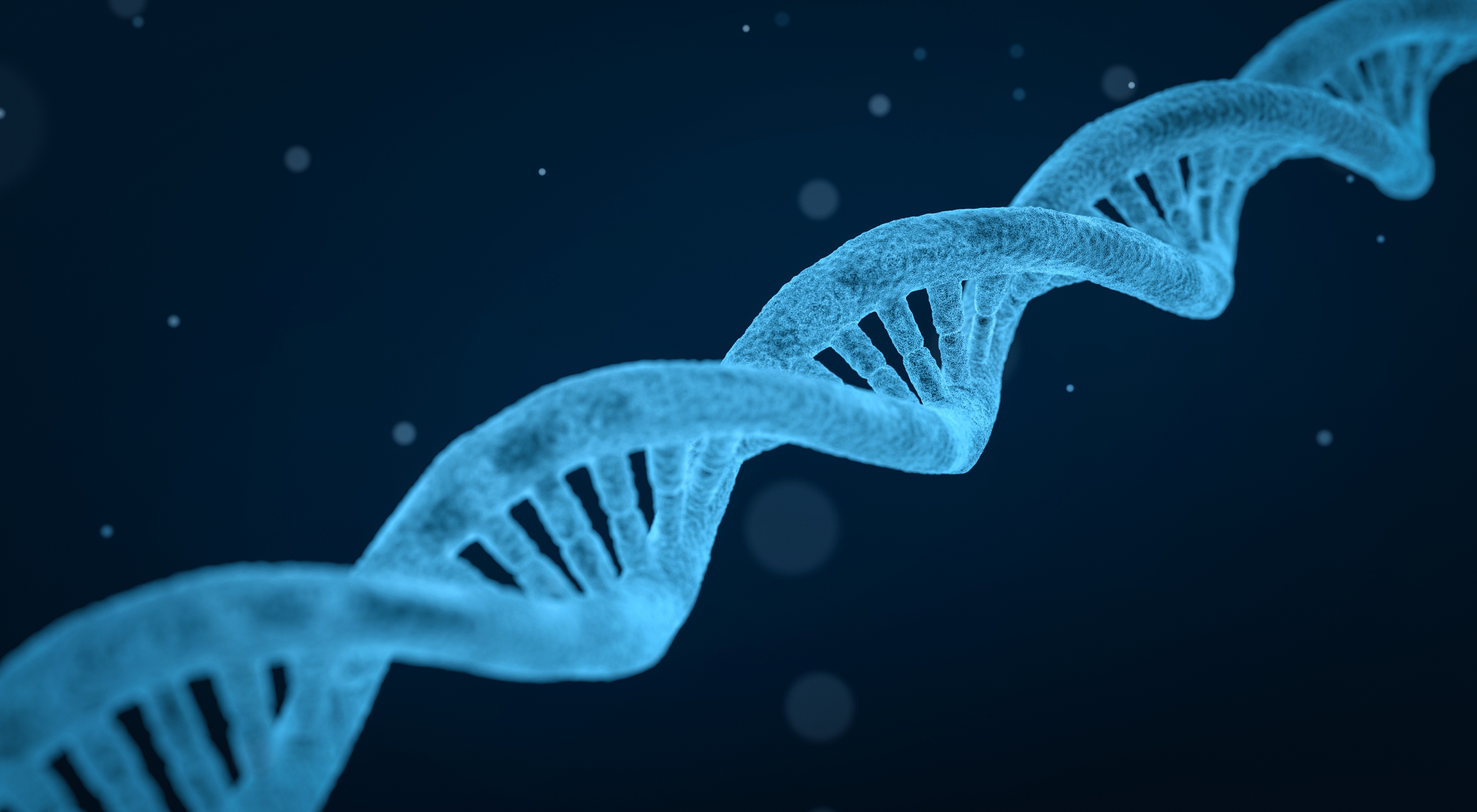
Based on this information Watson and Crick proposed the double helix model of DNA-A twisted ladder-like molecule with two outer sugar phosphate chains and rungs formed by nucleotide pairs. Paired nucleotides, which always occur as A-T or G-C, are linked by hydrogen bonds. Watson and Crick also proposed that genetic information is encoded by the sequence of base pairs along the DNA molecule.
基于这些信息,Watson 和 Crick提出了双螺旋结构模型,成对的核苷酸通过氢键相连,遗传信息就贮藏在碱基对中。
-
How DNA Replicates (DNA如何复制)
In their model of DNA structure and function, Watson and Crick hypothesized that DNA replicates itself by “unzipping” along the hydrogen bonds joining A to T and C to G. This process would produce two opposite halves that could then serve as templates for the construction of new, complementary strands. This model of semiconservative replication conservative because each new molecule has one half of the former parent molecule-was later confirmed by the work of
DNA进行复制是以拉链方式自我复制,产生的两个二分体分别为模板生成互补链,即半保留复制。并由Meselson和 Stahl验证。
In E. coli DNA replication begins with the formation of a bubblelike structure on the circular chromosome that is produced by replication forks. Studies of bacterial DNA replication have shown that a growing DNA chain lengthens only in the 5’ to 3’ direction (from the 5’ carbon of one sugar to the 3’ carbon of the next). The leading strand is synthesized continuously, while the lagging strand is synthesized in short stretches known as Okazaki fragments. The enzyme DNA polymerase links free nucleotides as they line up on the template formed by the original strand of the parent molecule.
In eukaryotes DNA replication follows the same general principles as in prokarotes. On the long DNA molecules replication proceeds (in two directions at once) from hundreds or thousands of points of origin.大肠杆菌复制开始时形成泡样复制叉,链生长方向由5′向3′端,前导链连续生成,后随链由冈崎片段组成,由DNA聚合酶催化。真核生物复制与原核生物复制相似,但有几百到几千个复制原点(原核一般只有一个复制原点)。
第 8 章 Animal Development
-
Production of Sperm and Eggs(精子和卵子的产生)
In sexually reproducing organisms males and females produce sex cells, known as gametes. These are swimming sperm in males and ova (eggs) in females.
在性繁殖过程中,生物的雄性和雌性产生性细胞,称配子。雄性是能够游动的精子,雌性是卵子。
The process of sperm production, spermatogenesis, takes place in testes. The sperm originate in gonial cells (spermatogonia) in the walls of seminiferous tubules. Spermatocytes produced by mitosis in spermatogonia divide meiotically to generate haploid spermatids. The mature sperm has a tail, a nucleus containing haploid chromosomes, and a front end with an acrosome, the storage site for enzymes that will aid fertilization.
精子产生过程,即精子发生在睾丸中。精子产生于输精管壁的性母细胞(精原细胞)。精原细胞经有丝分裂再减数分裂产生单倍体精子细胞,即精母细胞。成熟精子有尾部,单倍体染色体组,头部有顶体,内部储存酶类,有助于受精。
Ova, which are produced during oogenesis, are generated in gonial cells (oogonia) of the female’s ovaries. Oocytes then enter a stage of arrest in early meiosis. At a species-specific later point, a final ripening (ovulation) and the first meiotic division occur. A second meiotic division, followed by development of the embryo, takes place if the egg is fertilized.
在卵子发生过程中,由卵巢中的性母细胞产生。卵母细胞进入减数分裂的抑制阶段。第一次减数分裂产生一个成熟卵。如果卵受精,那么第二次减数分裂伴随胚胎的发育。
Eggs vary greatly in size from species to species and have complex structures. Virtually all developing animal ova are surrounded by helper cells, either follicle cells or nurse cells. Depending on the species, eggs also store varying amounts of yolk, a reservoir of nutrients produced by digestive-gland cells in the mother’s body. Finally, follicle cells or cells of the maternal oviduct provide protective coatings for the egg, including albumen (egg white) and various types of outer membranes and shells.
品种间卵的大小变化很大,并且有复杂的结构。实际上,所有发育过程中的卵都辅助细胞环绕,要么是滤泡细胞,要么是抚育细胞。依赖物种的不同而不同,卵黄贮备也不同,即由母体消化腺细胞产生的营养储备。最后,滤泡或母体输卵管细胞产生保护性的卵膜,包括清蛋白和各种外部膜及壳。
Frog oocytes have served as model systems for studies of oocyte development. During maturation they produce huge numbers of ribosomes through gene amplification. Large quantities of mRNA may also be made and stored.
蛙卵母细胞作为卵母细胞发育的研究系统模型。在成熟过程中,通过基因扩增产生大量的核糖体。同时也产生和储备了大量的mRNA。
-
Fertilization: Initiating Development(受精:启动发育)
Fertilization unites male and female gametes and initiates development. In some species fertilization is external; in others (including most terrestrial animals) it takes place internally. The first contact of the sperm head with the egg’s jelly coat triggers the acrosome reaction, in which enzymes are released to digest a hole through the egg’s protective layers, and the plasma membrane of the sperm is brought into position to bind to the ovum’s surface. After fusion of the egg and sperm plasma membranes, the haploid male nucleus with its chromosomes moves into the egg cytoplasm. Fusion also triggers the egg’s final meiotic reduction divisions. When sperm and egg nuclei unite, the two sets of chromosomes mingle to create a diploid set. The fertilized egg is now a zygote.
雌雄配子结合作用称受精作用,发育开始。某些物种中,是外部受孕;另一些物种,包括大部分陆生动物,是内部受孕。当精子和卵子的胶状膜发生接触时,触发了顶体反应。释放多种酶而将卵保护膜消化出一个洞。精子的原生质膜与卵子的表面连接起来。精卵原生质膜融合后,单倍体雄性核进入卵细胞质。融合也触发了最后的减数分裂。当精卵核结合时,两套染色体混合产生一二倍体,即受精卵。
The egg’s cortical reaction serves as a barrier to the entry of more than one sperm. Initially, there is a temporary change in the egg’s electrical state, and the egg cell is activated. The final stage of the reaction, the rapid elevation of the fertilization membrane, prevents further sperm penetration.
卵皮层阻止其他的精子进入,充当壁垒作用。开始时,卵电位发生暂时变化,卵细胞被激活。反应最后阶段,受精卵的膜快速隆起,阻止更多精子进入。
In some species fertilization is not necessary. Instead, parthenogenesis takes place: the egg is spontaneously activated and proceeds to normal embryonic development.
对某些物种而言,受精不是必须的。孤雌生殖,即卵自发地被激活并进入正常的胚胎发育过程中。
-
Cleavage: An Increase in Cell Number(分裂:细胞数量的增加)
Cleavage, the major developmental event immediately following fertilization, is a special form of cell division (mitosis). Cleavage produces a blastula, a sheet of cells rounded into a sphere that in most species surrounds a cavity. In the process, the single-celled zygote is divided into many small cells, and yolk, mRNA, ribosomes, and other materials arc distributed to each cell in precise ways. The cells of the blastula, called blastomeres, also each receive a full diploid set of chromosomes.
受精后,立即发生卵裂,细胞有丝分裂的特殊过程。卵裂产生一个囊胚,形成的细胞壁球形排列形成一个空腔。在这个过程中,单细胞的受精卵分裂成许多小细胞,卵黄,mRNA,核糖体和其他物质被精确分配到每个细胞中。这些囊胚细胞,称卵裂球,每个细胞都有一套二倍体染色体组。
There are different patterns of cleavage in different species. The amount of yolk present in the egg is a major factor in determining the pattern: in species having little yolk (such as mammals) the zygote cleaves completely through, forming cells that are roughly equivalent in size. In frogs, in which the egg has somewhat more yolk, cleavage proceeds more rapidly in regions of the embryo having less yolk. In bird eggs the yolk is so massive that cleavage divisions are restricted to a tiny area of cytoplasm.
不同物种,卵裂方式不同。决定因素主要取决于卵黄的含量。含有少量卵黄的物种(例如哺乳动物),合子分裂得很彻底,子细胞大致平均分裂。蛙卵,卵黄稍微多点,在胚胎的卵黄较少区域发育更快些。鸟卵卵黄很大,卵裂被限制在细胞质很小区域内。
In many species the precise distribution to blastomeres of molecular determinants in the cytoplasm is crucial to proper development of different cell types in the embryo. In mammal and bird species the fate of cells is determined by the position of a cell late in cleavage.
细胞质中分子遗传因素精确分配到卵裂球中,对许多物种而言,是发育成胚中不同类型细胞关键所在。对哺乳动物和鸟类而言,细胞的命运最终由细胞分裂后所处的位置决定的。
-
Gastrulation: Rearrangement of Cells(原肠胚:细胞重排列)
The rearrangement of the blastula into a three-dimensional organism with inner, middle, and outer layers occurs during gastrulation. The resulting gastrula consists of an outer ectoderm, an inner endoderm, and a mesoderm layer positioned between them.
在原肠胚形成过程中,囊胚重新排列,形成包括内层,中层,外层的三围组织。最终原肠胚由一个外肠胚,内肠胚,和一个中肠胚构成。
Each layer gives rise to specific tissues during embryonic development. A variation in gastrulation, involving the movement of cells into endodermal and mesodermal positions through the thickened primitive streak, arose in reptiles and can still be seen in bird and mammalian embryos, lending support to the theory that birds and mammals evolved from reptiles.
每个胚层产生特殊的胚胎组织。密实的原肠胚通过细胞运动进入内胚层和中胚层,爬虫,鸟,哺乳动物的胚胎都如此。因此提出这样的理论,鸟类和哺乳动物是由爬虫进化而来的。
-
Organogenesis: Formation of Functional Tissues and Organs(器官发生:功能组织和器官的形成)
The organs and tissues of the embryo arise during organogenesis as cells inside the embryo and on its surface become specialized. Organogenesis actually includes two closely linked processes, morphogenesis and differentiation. During morphogenesis cells and cell populations change shape: an example is neurulation in vertebrate embryos, in which the edges of the flat neural plate fold upward and fuse, forming the beginnings of the hollow brain and spinal cord. During differentiation cells mature so that they may perform separate functions. This maturation may include taking on a function-related shape, such as the long, spindly shape of skeletal-muscle cells. Cell differentiation also results in responsiveness-the ability of a cell to be regulated within the organism through the action of hormones, neurons, and other signals.
胚经过内部细胞和表面细胞特化后,器官形成,发育成器官和组织。器官形成实质上包括两个联系紧密的过程,即形态发生和分化。在形态发生期间,细胞和细胞群体形状发生改变:例如,脊椎动物的神经胚,扁平神经板的边缘向上折叠并融合,是中空大脑和脊髓神经形成的开端。在分化期间,细胞成熟,执行各自功能。成熟包括功能相关的成型过程。例如,细长的骨骼肌肉细胞。细胞分化也产生应答能力,即细胞受生物体内激素,神经和其他信号的调控过程。
-
Embryonic Coverings and Membranes(胚胎覆盖物和胎膜)
The embryos of land vertebrates are enclosed within four extraembryonic membranes that afford protection while still permitting the exchange of gases, nutrients, and other materials.
脊椎动物的胚胎被4层膜包被,起保护作用,但仍能交换气体,营养和其他物质。
-
Growth: Increase in Size(增长:规模增加)
Growth in embryos is largely due to an increase in the number of cells rather than to an increase in the size of individual cells. In many species the extent of embryonic growth is limited by the availability of food (yolk). In animals that develop entirely free of the maternal body, such as frogs and insects, the embryo give rise to a larval stage that can feed itself and later undergo metamorphosis to attain the adult stage. In many species the most spectacular growth phase takes place during the juvenile and adolescent phases of the life cycle. Actual growth generally stops once the organism reaches its typical adolescent phases of the life cycle. Actual growth generally stops once the organism reaches its typical adult size, although replacement of dead cells may continue.
胚的生长很大程度取决于细胞数量的增加而不是单个细胞大小的改变。在大多数物种中,胚的生长是受卵黄的量限制的。在动物细胞中,完全依赖于母体,例如蛙和昆虫,胚产生幼虫状态,后来经历变态而进入成年状态。在许多物种中,在少年和青春期,发生特别显著的生长。一旦细胞进入成年状态和成年大小,生长就停止了,尽管死细胞的替代不断发生。
A special type of growth, regeneration of lost body parts, can take place in adults of some species. Prior to such regeneration cells in stump tissue undergo dedifferentiation. They lose their functional phenotype, divide rapidly, and generate a population of cells that will regenerate the lost part. Compensatory hypertrophy is a different, temporary growth response in which residual tissue increases in mass and cell number: cells undergo mitosis but do not dedifferentiate.
一个特殊类型的生长,再生失去的部分躯体,发生在某些物种的成体中。在再生之前,残肢组织细胞经历了去分化过程。他们失去功能表型,快速分裂,产生细胞群来再生失去的部分。代偿式肥大是一个不同的,暂时的生长应答过程,残余组织在体积和细胞数量上增加:细胞经历了减数分裂,但没有去分化过程。
-
Aging and Death: Final Developmental Processes(衰老与死亡:最后的发展过程)
Aging is an ongoing, time-dependent developmental process in which body parts deteriorate. Proposed causes include the degeneration of collagen (the fibrous proteins of the connective tissues) and limits on the number of times cells can divide. Other theories focus on a decline of the immune system or on the accumulation of lipofuscins (aging pigments).
老化是一个持续过程,随时间发育,身体部分恶化。可能原因包括胶质的退化(纤维蛋白)和能分裂活细胞的限制。另外理论认为,免疫系统的免疫下降或脂褐素的堆积造成的。
第一章
- Polysome:多聚核糖体 → RNA and ribosomes:RNA和核糖体
- Pinocytosis:胞饮 → cell drinking
- Exocytosis:胞吐 → expel:排出
- Plastid:质体 → in plants only:仅在植物体中
- Golgi complex:高尔基体 → packaging:包装,打包
- Flagella:鞭毛 → whiplike:鞭子似的,像鞭子的
- Phagocytosis:吞噬 → engulfment:吞食
- Lysosome:溶酶体 → baglike structure:像袋子一样的结构
- Basal body:基体 → where flagella grow:鞭毛生长的地方
- Chemotactic:趋化 → toward or away from a chemical stimulus:朝向或远离化学刺激
- Nucleus:核 → control room:控制中心
- Vacuole:液泡 → vacant:空着的
- Ribosome:核糖体 → protein synthesis:蛋白质合成
- Cytoskeleton:细胞骨架 → weblike:像网的
- Mitochondrion:线粒体 → power generator:发电机
- ❌The DNA of prokaryotic cells is concentrated in the nucleus. 原核细胞的DNA集中在细胞核内。
- ✔Ribosomes are derived from the nucleoli.核糖体来源于核仁。
- ❌Unlike other cell membranes, the nuclear envelope has no pores.与其他细胞膜不同,核膜没有孔。
- ✔The smooth endoplasmic reticulum is held in place by the cytoskeleton.光滑的内质网由细胞骨架固定。
- ✔Structural proteins are exportable.
- ✔The nuclear envelope is produced by the rough endoplasmic reticulum.核膜由粗面内质网产生。
- ✔Most cellular proteins are manufactured on ribosomes.大多数细胞蛋白质是由核糖体制造的。
- ✔White blood cells work by phagocytosis.白细胞通过吞噬作用起作用。
- ❌Prokaryotic cells have microbodies.原核细胞有微体。
- ✔Mitochondria are self-replicating.
- ✔Pinocytosis describes the intake of fluid into a cell by a vacuole.
- ❌Both prokaryotic and eukaryotic cells have a supporting cytoskeleton.
- ❌Carotenoids are colorless molecules.
- ❌Grana are surrounded by stoma.
-
Most of the properties associated with processes of life are properties of __
a. the nucleus
b. DNA
c. the cytoplasm
d. endosymbionts 内共生体 ✔
e. none of the above -
Ribosomes
a. are organelles involved in protein synthesis 参与蛋白质合成的细胞器 ✔
b. are the cell’s main energy source
c. are storage sites for starch
d. are involved in the breakdown of proteins
e. store genetic information in the form of DNA -
Smooth endoplasmic reticulum (SER) __
a. lacks ribosomes
b. is active in fat and steroid synthesis
c. is involved in the oxidation of toxins
d. all of the above ✔
e. none of the above -
Ribosomes are manufactured in __核糖体制造是在
a. cytoplasm
b. nucleoli 核仁 ✔
c. mitochondria
d. smooth endoplasmic reticulum
e. rough endoplasmic reticulum -
Lysosomes contain __ 溶酶体包含
a. hydrolytic enzymes ✔
b. genetic material
c. stored fats
d. proteins
e. carbohydrates -
The process of phagocytosis involves __吞噬的过程包括
a. vacuolar engulfing of particulate matter 颗粒物质的液泡吞噬 ✔
b. exocytosis
c. intake of water by a cell’s vacuole
d. expulsion of particulate matter from a cell
e. expulsion of water from a cell -
Transformation of energy and storage of energy in the cell are the main function of __ 能量的转换和储存是主要功能对于
a. ribosomes
b. microbodies
c. contractile vacuoles
d. mitochondria 线粒体 ✔
e. smooth endoplasmic reticulum -
In the mitochondria, enzymes involved in ATP generation are __在线粒体中,参与ATP产生的酶是
a. located within the matrix
b. located on the cristae 位于嵴上 ✔
c. located on ribosomes in the matrix
d. dispersed throughout the cristae and matrix
e. associated with polysomes -
Chromoplasts are a type of __ 有色体是一种
a. pigment
b. storage bin
c. nutrient tank
d. plastid 质体 ✔
e. none of the above -
An mRNA molecule and its associated ribosomes make up __ 一个信使rna分子及其相关的核糖体组成
a. a multisome
b. a polysome ✔
c. a lysosome
d. a monosome
e. none of the above -
Leucoplasts are plastids that __ 白色体是一种质体
a. contain carotenoid
b. are involved in photosynthesis
c. serve as a storage site for starch, proteins, and oils 作为淀粉、蛋白质和油脂的储存场所 ✔
d. are responsible for plant pigmentation
e. are none of the above -
Each individual cell is supported by a network of filaments and tubules known as __ 每个细胞都由一个由丝和小管组成的网络支撑
a. cytoplasm
b. a vacuole
c. an endoplasmic reticulum
d. a cytoskeleton 细胞骨架 ✔
e. a plasma membrane -
In prokaryotic cells the DNA is __ 在原核细胞中DNA是
a. found in the nucleus
b. organized into a number of discrete chromosomes
c. condensed into an unbounded area called the nucleoid 凝聚成一个无界区域,称为类核 ✔
d. condensed into nucleoli
e. enclosed in a nuclear envelope -
Amino acids are assembled into proteins in the cells __ 氨基酸在细胞中组装成蛋白质
a. in the nucleus
b. on ribosomes 在核糖体 ✔
c. in mitochondria
d. in lysosomes
e. in the Golgi complex -
During protein synthesis a single mRNA molecule may be associated with several ribosomes to form __在蛋白质合成过程中,单个mRNA分子可能与几个核糖体结合形成
a. a gene
b. a lysosome
c. a polysome 多聚核糖体 ✔
d. smooth endoplasmic reticulum
e. rough endoplasmic reticulum -
Export proteins are proteins destined for export from the cell or for inclusion in cell membranes. The can be identified by __
a. their secondary structure
b. a sequence of amino acids known as signal peptide 被称为信号肽的氨基酸序列 ✔
c. their association with a polysome
d. all of the above
e. none of the above -
Proteins synthesized on endoplasmic reticulum are modified __ 内质网合成的蛋白质经过修饰
a. in vacuoles
b. in the cell membrane
c. in the Golgi complex ✔
d. in lysosomes
e. not at all after synthesis -
An amoeba living in water whose tonicity is lower than that of its internal cytoplasm must deal with a constant infux of water into the cell. It expels this excess water by __ 生活在水中的变形虫的张力低于其内部细胞质的张力,因此必须不断地向细胞内注入水。它把多余的水排出
a. using excretory proteins
b. waterproofing its cell membrane with lipids
c. using a contractile vacuole 用一个可收缩的液泡 ✔
d. using phagocytosis
e. moving to an environment with lower tonicity -
Hydrolytic enzymes in the cell digest food in the __ 细胞里的水解酶消化食物在
a. lysosome 溶酶体 ✔
b. Golgi complex
c. mitochondria
d. chloroplast
e. endoplasmic reticulum -
An organelle isolated from an animal cell is found to contain large numbers of enzymes involved in energy transformation. This organelle is most likely to be __人们发现从动物细胞中分离出来的细胞器含有大量参与能量转换的酶。这个细胞器很可能是
a. a lysosome
b. a Golgi complex
c. a mitochondrion 线粒体 ✔
d. a chloroplast
e. a leucoplast
第二章
- C3 plant→moist climates
- pigment→absorbs
- light reactions→water oxidized
- thylakoid→surrounds a lumen
- ground state→most stable
- reaction center→a specific site
- photorespiration→greenhouse effect
- RuBP→electron acceptor for CO2
- Calvin Benson cycle→light-independent reactions
- C4 plant→dry climates
- photon→wave and particle
- chlorophyll→principal pigment
- chloroplast→banana shape
- carbon cycle→inefficient dark reaction
- light- independent reactions→light optional
- ❌Photosynthesis occurs in all living things.
- ✔Photon energy is inversely proportional to wavelength.
- ❌Chlorophyll b is not found in any prokaryote.
- ❌The reaction center in photosystem Ⅱ is P700.
- ✔Cyclic photophosphorylation produces additional ATP in plants.
- ❌The chemiosmotic theory applies to mitochondria but not to chloroplasts.
- ❌Light-dependent reactions take place in the chloroplast stroma.
- ✔The Calvin-Benson cycle may take place either in light or in the dark.
- ❌Light-independent reactions take place in thylakoid membrane.
- ✔C3 plant grow slowly in hot, dry weather.
- ✔Chlorophyll a is the primary photosynthetic pigment in green plants.
-
The process of photosynthesis can be considered as a series of reactions in which light energy from the sun is __ 光合作用的过程可以看作是来自太阳的光能的一系列反应
a. transformed into chemical energy 转化成化学能 ✔
b. not transformed in the plant
c. transformed into kinetic energy
d. transformed into potential energy
e. transformed by electrons into electric energy -
In the first stage of photosynthesis water is __ 在光合作用的第一阶段,水是
a. oxidized 被氧化 ✔
b. phosphorylated
c. reduced
d. heated
e. none of the above -
In the course of photosynthesis glucose molecules are formed from CO2 and H2O. This process __在光合作用过程中,CO2和H2O形成葡萄糖分子。这个过程
a. is exergonic
b. is endergonic 是吸能 ✔
c. requires no energy
d. liberates energy to the atmosphere
e. is none of the above -
The splitting of water molecules during photosynthesis __光合作用水分子在光合作用中分解
a. occurs independently of light
b. is known as the Calvin-Benson cycle
c. takes place in the mitochondria
d. is light-dependent 是依赖光 ✔
e. only occurs in C4 plant -
The end products of the first stage of photosynthesis that drive the second stage are __ 驱动光合作用第一个阶段的最终产物是
a. ADP and NAD
b. ATP and NADPH ✔
c. H2O and ADP
d. CO2
e. low-energy compounds -
During the second stage of photosynthesis, __
a. CO2 is oxidized to carbohydrate
b. O2 is reduced
c. CO2 is reduced✔
d. CO2 is liberated into the atmosphere
e. carbohydrates are oxidized to release energy -
The fattened stacks of saclike structures in the chloroplast are called grana. Each sac is known as __叶绿体中肥厚的囊状结构称为基粒。每个囊被称为
a. a lumen
b. a granum
c. a membrane
d. a thylakoid✔
e. a photoreactive center -
The enzymes and cofactors that facilitate the light-dependent reactions of photosynthesis are embedded in the __酶和辅助因子促进光合作用依赖光的反应是嵌入在
a. stroma
b. lumen of the cytoplasm
c. thylakoid membrane 类囊体膜 ✔
d. cell wall
e. nuclear membrane -
The distance a photon travels during a complete vibration is __
a. its particle property
b. its radiation
✔c. its wavelength
d. its strength
e. none of the above -
Biological molecules can only capture light whose wavelength lies in __.
a. the high-energy part of the spectrum
b. the low-energy part of the spectrum
c. any part of the spectrum
✔d. the visible part of the spectrum
e. the gamma-ray spectrum -
When a chlorophyll molecule absorbs light, __.
a. all wavelengths are equally absorbed
b. green light is maximally absorbed
✔c. green light is not absorbed
d. red light is reflected
e. blue light is reflected -
The last electron acceptor in electron transport is __.
a. O2
✔b. P700
c. photosystem I
d. water
e. none of the above -
The precise range of wavelengths active duling photosynthesis is known as __.
a. the electromagnetic spectrum
b. the absorption spectrum
c. the high-energy spectrum
d. the low-energy spectrum
✔e. the action spectrum -
Pigment molecules aggregated together into an antenna complex __.
a. act together to gather light energy
b. transfer light energy down an electron transport system
c. are closely associated with reaction-center chlorophyll molecules
✔d. all of the above
e. none of the above -
When a chlorophyll molecule absorbs a photon of light, __.
✔a. the outermost electron becomes excited and moves to a higher- energy orbital
b. it immediately donates an electron
c. all its electrons remain in the ground state
d. fuorescence is the first event to occur
e. the molecule donates all its electrons -
Cyclic phosphorylation differs from noncyclic phosphorylation in that __.
a. only cyclic phosphorylation yields NADP
✔b. cyclic phosphorylation yields ATP while non-cyclic phosphorylation yields ATP and NADPH
c. cyclic phosphorylation yields ATP and non-cyclic phosphorylation yields only NADPH
d. only noncyclic phosphorylationyields ATP
e. none of the above; there is no difference in end product or in the processes -
The Calvin-Benson cycle takes place in __.
a. the ribosomes
✔b. the inner plasma membrane
c. the cytoplasm
d. the stroma
e. none of the above -
In the light-independent reactions of photosynthesis, the first electron acceptor for atmospheric CO2 is __.
a. PGA
b. ATP
✔c. ribulose biphosphate
d. a carbohydrate subunit
e. a carboxylase -
The process of photorespiration __.
a. occurs when oxygen levels are high
b. is an inefficient form of light-independent reactions of photosynthesis
C. results in the fixation of oxygen
d. is due in part to stomata closure on hot, dry, sunny days
✔e. is all of the above
第三章
- cytokinesis → division of cytoplasm
- synapsis → crossing over
- histone → positively charged protein
- mitosis → cell division
- cell cycle → sequence of cell growth and division
- chalone → inhibit cell division
- spindle → set of microtubules
- chromatid → single chromosome copy
- nucleosome → DNA + histones
- diploid → two sets
- meiosis → gamete production
- cell plate → plant division
- sex chromosome → X and Y
- karyotype → chromosome display
- haploid → one set
- ❌Autosomes include X and Y chromosomes.常染色体包括X染色体和Y染色体
- ✔Cells enter G2 at the end of the S phase. S期结束时,细胞进入G2。
- ❌Chalones promote cell division.抑素促进细胞分裂。
- ✔The nuclear envelope forms in telophase.核膜在末期形成。
- ❌Plant cells have the most prominent centrioles.植物细胞有最显著的中心粒。
- ✔Nuclear division may occur without cytokinesis.核分裂在没有胞质分裂的情况下也可以发生。
- ✔Homologous chromosome pair in synapsis.同源染色体在联会时组成一对
- ✔Chromosomes break at chiasmata.染色体在交叉处断裂。
- ❌Sexual organisms cannot be cloned.有性生物不能被克隆。
- ❌All daughter cells are haploid.所有子细胞都是单倍体。
-
DNA is replicate during the __.DNA复制在
✔a. S phase
b. M phase
c. G2 phase
d. G1 phase
e. G0 phase -
Members of a chromosome pair collectively make up __.一对染色体共同组成的成员
a. a tetrad
b. chromatin
c. a homologous pair
✔d. a chromatid 一个染色单体
e. a nucleosome -
Autosomes represent __.常染色体表示
a. all chromosomes found in a normal human cell
b. those chromosomes found in egg or sperm cells
✔c. all chromosomes other than the sex chromosomes 除性染色体外的所有染色体
d. chromosome pairs with unlike members
e. all homologous chromosomes -
In a typical vertebrate the longest phase is __.在典型的脊椎动物中,最长的阶段是
a. S
b. M
C. G2
✔d. G1
e. none of the above -
A normal diploid human cell contains __.一个正常的二倍体人类细胞包含
✔a.46 chromosomes
b.23 chromosomes
c.46 homologous pairs of chromosomes
d.20 chromosomes
e.20 pairs of chromosomes and 2 sex chromosomes -
Male sex chromosomes can never be __.男性的性染色体永远不会
a. haploid
✔b. homologous 同源
c. diploid
d. analogous
e. duplicated -
During G1, S, and G2 phases, a cell is said to be in __.在G1、S和G2阶段,细胞被称为处于
a. the process of mitosis
b. the process of meiosis
c. metaphase
d. cytokinesis
✔e. interphase 分裂间期 -
It is possible for 2 meters of DNA to fit into a human cell 5 micrometers in diameter because __.2米长的DNA可以植入直径5微米的人体细胞,因为
a. DNA is broken into small fragments
✔b. DNA is wound around histones DNA缠绕在组蛋白周围
c. DNA is wound around nonhistone proteins
d. Chromosomes are composed of chromatids
e. Chromosomes are joined at the centromere -
The association of a DNA molecule, histones, and nonhistone proteins is known as a __.DNA分子、组蛋白和非组蛋白的结合称为
a. nucleosome
b. chromosome
✔c. chromatin 染色质
d. chromatid
e. karyotype -
The two daughter strands of a duplicated chromosome are each known as (a) __.复制染色体的两条子链分别称为
a. synapse pair
b. centromere
✔c. chromatid 染色单体
d. homologous chromosome
e. chiasmata -
Chromosomes become visible during mitotic phase of __.染色体在有丝分裂期间可见
a. metaphase
b. anaphase
✔c. prophase 前期
d. synapsis
e. none of the above -
Anaphase begins during mitosis when 后期开始于有丝分裂期间
a. chromosomes line up in the nuclear region of the cell
✔b. centromeres split and chromatids start to move apart 着丝点分裂,染色单体开始分离
c. synapsis occurs
d. crossing over occurs
e. prophase has been completed -
A new nuclear envelope begins to form around each chromosome set during __.一个新的核膜开始在每条染色体周围形成
a. anaphase I
b. metaphase
c. prophase Ⅱ
d. cytokinesis
✔e. telophase 末期 -
In animal cells spindle formation is assoclated with __. 在动物细胞中纺锤形形成与
a. the nuclear membrane
b. nucleosomes
c. histone proteins
✔d. the centriole 中心粒
e. chromosomes -
Haploid cells contain __. 单倍体细胞包含
a. the diploid chromosome number
✔b. one copy of each chromosome 每个染色体的一个拷贝
c. two copies of the sex chromosomes
d. twice the diploid chromosome number
e. pairs of homologous chromosomes -
Meiosis results in__. 减数分裂的结果
a. no change in the chromosome number
b. a doubling of the chromosome number
✔c. a reduction in the chromosome number 染色体数目的减少
d. two interphase cells
e. four diploid cells -
Crossing over occurs during __. 交叉发生在
a. G0 phase
b. G1 phase
✔c. synapsis 染色体联会
d. cytokinesis
e.Mphase -
Cytokinesis is accomplished in animal cells by __. 动物细胞的胞质分裂是通过
✔a. a ring of actin filaments pinching the cell in two 将细胞夹成两半的肌动蛋白丝环
b. the formation of a cell plate
c. the formation of a new cell wall
d. the action of centrioles
e. the re formation of the nuclear membrane -
During crossing over __. 在交叉时
a. chromosomes line up along the metaphase plate .
✔b. homologous chromosomes exchange corresponding pieces of genetic information 同源染色体交换相应的遗传信息片段
c. chromosomes move to opposite ends of the cell
d. the cell is in S phase
e. the cell is undergoing mitosis -
The advantages of asexual reproduction include__.无性繁殖的优点包括
a. it is more rapid than sexual reproduction
b. it requires few specialized reproductive structures
c. it preserves the individual’s winning genetic make up
✔d. all of the above 上述全部
e. a and c
第四章
-
dominant 显性 → always expressed 总是表达
-
phenotype 表型 → appearance 外观
-
allele 等位基因 → alternative forms 替代形式
-
homozygous 纯合子 → similar 相似
-
recessive 隐性性状 → nondominant 非显性的
-
P1 → parental 亲本
-
dihybrid cross 双因子杂种杂交 → two characters
-
law of segregation 分离定律 → separate 分离
-
gene 基因 → basic units of heredity 遗传的基本单位
-
pangenesis 泛生论 → Hippocrates 希波克拉底
-
F2 → grandchildren
-
sex-linked 伴性的 → X or Y chromosome
-
heterozygote 杂合子 → different
-
genotype 基因型 → total alleles 总等位基因
-
germ plasm theory → Weismann 魏斯曼
- ❌Germ plasm theory is the notion that each body part produces a“seed" .种质理论的概念是,身体的每个部分产生一个“种子”。
- ✔Breeding true means offspring are identical with parents in certain traits.真正的繁殖是指后代在某些特性上与父母相同。
- ✔Alleles are simply alternate forms of genes.等位基因只是基因的另一种形式。
- ❌Snapdragon color is an example of blending inheritance.金鱼草颜色是混合继承的一个例子
- ✔An XO male may result from nondisjunction. XO雄性可能是不分离的结果。
- ❌Hippocrates fully rejected the idea of pangenesis.希波克拉底完全拒绝泛生学说。
- ✔Homozygous organisms produce only one type of gamete for a gene.纯合子的生物体一个基因只产生一种配子。
- ✔Test crosses helped establish the law of segregation.杂交试验有助于建立分离定律。
- ✔Sutton and Boveri developed the chromosome theory of heredity.萨顿和博韦里发展了遗传的染色体理论。
- ❌Mendel’s second law states that characters are inherited dependently.孟德尔第二定律指出,特性是独立继承的
-
The notion that each part of the body of an organism produces a“seed”that then travels to the reproductive organs is called __.生物体身体的每个部分都产生一种“种子”,然后传播到生殖器官的概念被称为。
a. germ plasm theory
✔b. pangenesis 泛生论
c. law of independent assortment
d. law of segregation
e. heterozygosity -
The germ plasm theory of heredity, which emphasized the role of parental germ cells in determining traits in offspring, was linked to a widespread belief in__.遗传的种质理论强调亲代生殖细胞在决定后代性状方面的作用,这与一种普遍的观念
✔a. blending 混合
b. vitalism
c. pangenesis
d. Mendelism
e. Herodotus -
When true breeding plants are self-fertilized, they__.当真正的育种植物自我受精时,它们
a. produce heterozygous offspring
b. produce offspring that show a range ofphenotypes
✔c. produce offspring that are identical to the parent 产生与亲本完全相同的后代
d. produce offspring with dominant genotypes
e. produce offspring with recessive genotypes -
Mendel’s experiments with peas had unique and important features, including the fact that __.孟德尔的豌豆实验具有独特而重要的特点,其中包括
a. he studied traits that offered only two alternative outcomes
b. he followed and recorded the type and number of all offspring
c. he followed the results of each cross for two generations
✔d. all of the above
e. he used the test cross procedure for two generations -
A plant that is heterozygous for a particular trait __. 杂合子一种特殊性状的杂合子植物
a. carries identical alleles for that trait
✔b. carries different alleles for that trait 携带不同的等位基因
c. can be distinguished from a homozygous plant by its phenotype
d. shows incomplete dominance
e. is none of the above -
In modern terms Mendel’s first law states that __.用现代术语来说,孟德尔第一定律表明
✔a. during meiosis alleles of a gene segregate out at random在减数分裂期间,一个基因的等位基因会随机分离出来
b. homologous chromosomes pair during meiosis
c. chromosomes move in a predetermined manner
d. recessive genes are only evident in the homozygous phenotype
e. dominant genes are only evident in the homozygous phenotype -
Hereditary factors determining green seedcolor and yellow seed color are examples of __. 决定绿色种子颜色和黄色种子颜色的遗传因素,例如
a. incomplete dominance
✔b. different alleles of the same gene 同一基因的不同等位基因
c. sex linkage .
d. two genes
e. sex chromosomes -
If P represents a dominant allele and p a recessive allele for the same trait, a homozygous recessive individual will have the following genotype:__.如果P为显性等位基因,p为隐性等位基因,则纯合隐性个体具有以下基因型
a. PP
b. Pp
c. pP
✔d. pp
e. none of the above -
According to Mendel’s laws, in a cross involving an individual that is homozygous dominant for a trait and an individual that is homozygous recessive for the same trait, __.根据孟德尔定律,一个个体在某一性状上是纯合显性的,另一个个体在同一性状上是纯合隐性的
a. the recessive trait will be present in a 1:3 ratio in the F1 phenotypes
✔b. the recessive trait will not be present in the F1 phenotypes 隐性性状在F1表现型中不存在
c. the recessive trait will be present in the F1 phenotypes more often than the dominant trait
d. the recessive trait will be present three times more often than the dominant trait in the F1 phenotypes -
Mendel’s law of independent assortment states that__.孟德尔自由组合定律说
a. monohybrid crosses will show segregation and independent assortment
b. the segregation of alleles of one gene depends on the segregation of all other alleles
c. test crosses always produce heterozygous offspring
✔d. alleles of different genes segregate at random and fertilization is random 不同基因的等位基因随机分离,受精是随机的
e. alleles segregate at meiosis -
In a cross between a homozygous plant bearing round yellow seeds and a homozygous plant bearing wrinkled green seeds, all the offspring had round yellow seeds. If R represents the round allele and Y the yellow allele, the F1 genotype was__.在一株结黄色圆形种子的纯合子植株和一株结皱绿色种子的纯合子植株的杂交中,所有的后代都结黄色圆形种子。若R代表圆形等位基因,Y代表黄色等位基因,则F1基因型为
a. RRYY
b. RRyy
c. RRyY
✔d. RrYy
e. Rryy -
The punnett square was used by Mendel to 庞尼特形被孟德尔用来
✔a. predict the probabilities of different allele combinations 预测不同等位基因组合的概率
b. record the results of his test crosses
c. develop the idea of the dihybrid cross
d. disprove pangenesis
e. none of the above -
A dihybrid cross is a mating between two organisms 杂交是指两种生物交配
a. when at least one is heterozygous for two traits
✔b. when both are heterozygous for two traits 当两种性状都是杂合子时
c. when one is homozygous and one is heterozygous for a trait
d. when both are homozygous for a single trait -
For some specific traits the phenotypes of offspring are intermediate between those of the parents’ traits. This is a case of 对于某些特定性状,后代的表现型介于父母的表现型之间。这是一个例子
a. blending
b. linkage
✔c. incomplete dominance 不完全显性
d. intermediate inheritance
e. none of the above -
Sutton and Boveri proposed that Mendel’s hereditary factors were located on chromosome,in a theory known as Sutton和Boveri提出孟德尔的遗传因子位于染色体上,在一个被称为
a. pangenesis
b. germ plasm theory
✔c. chromosomal theory of inheritance 染色体遗传理论
d. independent assortment
e. blending theory of inheritance -
Sex chromosomes were first discovered in 性染色体最早发现于
a. peas
b. Manx cats
c. frizzle chickens
✔d. fruit flies 果蝇
e. humans -
Sex-linked traits are 位于性染色体的特征是
✔a. traits carried on sex chromosomes 性状由性染色体携带
b. traits only found in one sex
c. traits found in female fruit flies
d. traits carried only on the Y chromosome
e. none of the above -
Nondisjunction describes. 不分离描述
a. the movement of chromosomes to opposite poles of the cell during anaphase
✔b. the failure of homologous chromosomes to segregate during mitosis or meiosis 在有丝分裂或减数分裂过程中同源染色体分离失败
c. the failure of two new daughter cells to separate after mitosis
d. the process of crossing over during meiosis
e. none of the above -
In fruit fies the following genotypes will produce a female 在果蝇中,下列基因型将产生雌性
a. YY
b. YO
c.XY.
d. XO
✔e. XX -
A gamete showing a new association of alleles that differs from the parental associations is known as 一个配子显示出不同于亲本配子的新的等位基因组合称为配子
✔a. a recombinant type 一种重组
b. a crossing-over type
c. an incomplete dominant
d. a heterozygote
e. a homozygote
第五章
- Replication fork 复制叉 → start of DNA replication DNA复制的开始
- cytosine 胞嘧啶 → a DNA base
- Okazaki fragment 冈崎片段 → small piece of DNA
- X-ray diffraction X射线衍射 → photographic process
- nucleoside 核苷 → a base plus a sugar 碱基加糖
- semiconservative replication 半保留复制 → unwinding must occur 解旋必须发生
- 5’ to 3’ direction → DNA chain lengthens
- Chargaf’s rules → A=T
- base → ring structure composed of carbon and nitrogen 由碳和氮组成的环状结构
- double helix 双螺旋 → shape proposed by Watson and Crick
- ✔Hershey and Chase showed that genes are composed of DNA.研究表明,基因是由DNA组成的。
- ✔Complementation test can be used to study metabolic pathways.互补试验可用于研究代谢途径
- ❌Feulgen staining works on cell walls.富尔根染色作用于细胞壁。
- ❌Robert Feulgen discovered nucleic acid.罗伯特·福尔根发现了核酸。
- ✔Phages are made only of DNA and a protein coat.噬菌体仅由DNA和蛋白质外壳组成。
- ✔Dispersive replication requires breakage.分散复制需要破坏。
- ❌Not all organisms exhibit semiconservative replication.不是所有的生物都表现出半保留复制。
- ❌Auxotrophs are mutant Neurospora.营养缺陷体是变异脉孢菌。
- ✔Virulent pneumonia bacteria secrete a capsule.强毒性肺炎细菌分泌一种胶囊。
- ❌Watson and Crick did not make use of X-ray diffraction data.沃森和克里克没有利用x射线衍射数据。
- ✔The sequence of bases on the DNA molecule carries the genetic information.DNA分子上的碱基序列携带着遗传信息。
1 | IV. Multiple Choice |
第八章
- yolk 卵黄 → food
- amnion 羊膜 → cushions embryo 缓冲胚胎
- regeneration 重生 → replacement of lost parts
- parthenogenesis 单性生殖 → “virgin”birth
- cleavage 卵裂 → divides a single-celled zygote into many small cells 将单细胞合子分成许多小细胞
- zygote 受精卵 → fertilized egg
- chorion 绒毛膜 → fuses with allantois
- testis → homologous with ovaries
- cortical reaction 皮质反应 → prevents multiple fertilizations
- ovum 卵 → gamete or egg
- primitive streak 原条 → 与蛋黄有关
- blastomere 分裂球 → individual blastula cells
- allantois → trash dump
- oviduct 输卵管 → egg tube
- gonial cell → spermatogonia 精原细胞
- ✔Sertoli cells are helper cells in sperm production.支持细胞是精子生产中的辅助细胞。
- ❌The sperm head contains a small number of mitochondria. 精子头部含有少量的线粒体。
- ✔Oogenesis may be arrested for years in some species.在某些物种中卵子发生可能被抑制数年
- ✔An ostrich egg can be considered a single cell.鸵鸟蛋可以被认为是一个单细胞。
- ❌Chromosomes in the “lamp brush” phase produce little mRNA.
- ✔The acrosome reaction is triggered by the egg’s jelly coat.顶体反应是由卵的胶膜触发的。
- ❌Prior to fertilization, the egg’s electrical charge is positive.在受精之前,卵子的电荷是正电荷。
- ✔Parthenogenesis produces only females.孤雌生殖只产生雌性。
- ✔The so-called “vegetable pole” contains the most yolk.所谓的“植物极”含有最多的蛋黄。
- ✔The gut cavity is derived from an archenteron.肠道由原肠演变而来。
- ❌A mphioxus eggs show a prominent primitive streak.斑马鱼的卵显示出明显的原始条纹。
1 | IV. Multiple Choice |